"Music produces a kind of pleasure which human nature can not do without." ~Confucius

Monday, March 19, 2012

The Way(s) the Lady Rides...


One of the most well-known bounces is "This Is the Way the Lady Rides." It's fabulous. Who thought of it? We may never know.... but we'll keep on enjoying it.
There are also lots of variations on this wonderful rhyme... all guaranteed to bring delight to your little munchkin.

Each verse has a different description of riding based on the character, so your bouncing will change with each one. Again... these rhymes are MOST enjoyable when parent/grandparent is enthusiastic, descriptive, rhythmic and energetic. That's not too much to expect of you, right?

Here is the basic rhyme (or what many people think is the basic rhyme) and a collection of variations... chosen from those compiled by Mr. I-exude-musicality-out-of-every-pore-of-my-being, John Feierabend.

This Is The Way the Ladies Ride

This is the way the ladies ride,
A-clippity clop, A-clippity clop
A-clippity, clippity, clop.

This is the way the gentlemen ride,
A-gallop-a-trot, A-gallop-a-trot,
a-gallop, a-gallop-a-trot.

This is the way the farmers ride,
A-hobblety-hoy, a-hobblety-hoy,
A-hobblety, hobbelty-hoy!

This is the way the soldiers ride,
"And a Hep! 2, 3, 4, Hep! 2, 3, 4,
heppety, heppety, hep! 2, 3, 4.

This is the way the cowboys ride,
A-whoopy-i-ay, a-whoopy-i-ay,
A-whoopy, whoopy, whoopy-i-ay!

--As you can tell, the bounces get progressively livelier and bouncier as you go along. Can't tell if you're doing it right? Their laughs should also get progressively bigger as you go. If they're not squealing and laughing at the cowboy part.... try again with more gusto! :-)

Two Variations: 

1. This is the way the ladies ride,
Neat and small, neat and small.

This is the way the gentlemen ride,
Boots and all, boots and all.

This is the way that *baby rides,
Hurrah, hurrah, hurrah!

*Substitute baby's name.

2. This is the way the ladies ride,
Saddle aside, saddle aside,
(bounce baby sitting sideways on your lap)


This is the way the gentlemen ride,
Saddle astride, saddle astride.
(baby sitting astride)


This is the way the baby rides,
tucked inside, tucked inside.
(hug baby)

And this is how they all looked great
when they jumped over the 10-bar gate.
(bounce baby from one knee high over to the other)


Who needs mechanical plastic ponies outside the store when mommy or daddy can be a far superior horsey??
Go bounce those babies! :-)

Thursday, March 15, 2012

Practice Rhyming in Song


Remember Raffi? He's done more than just "Baby Beluga," my friends....
He did a fun rendition of "Down By the Bay" and it's been one of our favorite songs to sing around here because of its inherent silliness with the rhyming options (my boys' favorite characteristic) and its musicality (mommy's favorite characteristic).

Not familiar with this tune? Check it out Here.
Not the best video for its creative genius, but it'll teach you the song. :-)

This song allows your child to place rhyming words at the end that involve an animal doing something silly (like... "did you ever see some llamas eating their pajamas?").

So, gather kiddos and teach them the song. I actually find some of the best times to teach kids these songs is when we're not doing anything musical.... like getting ready for bed, driving in the car, getting dressed in the morning, cleaning up toys, etc...

It's a little tedious to have the kids hold the end of each phrase (down by the baaaaaaaay, where the watermelons grooooooooow....) without some cool guitar accompaniment, so I had the boys clap 4 times after each line.
Down by the bay (clap, clap, clap, clap)
Where the watermelons grow (clap, clap, clap, clap)...

I happened to find this great game at a consignment store:
From the above box, I selected combos of an animal and their rhyme that would work in the song (like... Did you ever see a fox hiding in a box?)
You don't need an official game though, you could simply print off pictures of rhyming words or look in your Memory Game box for some rhyming pics that would work... You don't need very many pairs - as many as you think your child will enjoy.

First, the boys had to match the rhyming pairs. Neither kiddo is reading yet, so mommy helped a lot; they did do good with hearing the matching sounds.


We chose three groups at a time to put with the song.
First we sang through the whole song for each pair.
Down by the bay (clap, clap, clap, clap)
etc.....
"...Did you ever see a snake using a rake, down by the bay?"

But, you could also just sing the song once then stick all the rhymes in sequence at the end (which is what we did after the first round because boys were getting a bit rowdy to get outside...)

Ex: "Did you ever see a snail, reading the mail? Did you ever see a goat riding in a boat? Did you ever see a dog playing with a frog, down by the bay?"

Have fun with rhyming and rhythm and singing all in one activity! Yippee!

Tuesday, March 13, 2012

Syllable Clapping with Cars

So, a while ago, my dear friend Nancy told me that clapping syllables of various words is something she observed in speech therapy practice... and since J has been receiving speech therapy, I've noticed his speech therapist doing it too.  So, I'm more inspired than ever to do this more and more.
Motivation 1: To think rhythmically and teach my kids the natural rhythm in words.
Motivation 2: To get J to speak better! Although, I do love the little rascal the way he is...

So, today we did a similar activity to this one but used vehicles instead.

Here's what to do:

Print off pics of automobiles from an image search for various coloring pages. Copy and paste them into a word document and format to whatever size you'd like. I printed them onto cardstock because I wanted them to be sturdier than just computer paper.

We used these vehicles: 
1 Syllable: Truck, Jeep 
2 Syllables: School Bus, Race Car
3 Syllables: Ice Cream Truck 
4 Syllables: Motorcycle


You'll need the pics, some black construction paper, yellow strips and glue.

Gather kiddos and have them paint their group of cars (if kids aren't into painting, just use plain ones or print some colored pics out, or cut pics from magazines and mount to construction paper, or use toy cars... whatever!).

 Yes, I know my children need haircuts.


When they've completed the painting, move on to creating the road while the pictures dry because your 2 year old used more water than color in his watercolor-ing.

Next, start with two or three vehicles getting on their road and clap syllables with a steady beat. Again, you'll do most of the demonstration and they'll try to mimic as best they can.


Make sure YOU get a turn to choose some too.... so you can show them how awesome your rhythmic-syllable skills are? Well, yes.... remember that they will imitate you so take opportunities to demonstrate well - don't expect them to do it perfectly by themselves from the get-go.


For the grand finale, we glued all the autos on the road and then clapped the other person's road (K clapped J's and vice versa). Great fun and improvement noticed by mom. Yay!

Have fun!!

Saturday, March 10, 2012

Tools of the Trade

If you are curious about what "tools" to have around for music making, this post will list some of my favorites for your consideration. If you have anxious grandparents wanting to buy their darling grandchild a wonderful Easter, etc. present, or if you happen to find one of these while browsing on Amazon, consider adding one or two to your list.

We all know that the really good parents like to make their own instruments with their kids... this is of course, wonderful. But, if you still want a cool selection to have around to grab anytime for your music-making jamborees, take a look and then get your groove on.

In no order of importance...

1. A Xylophone.

Don't be bored to tears yet.... we all know they're great toys/instruments, especially for babies and toddlers. Simple and easy to play, these introduce music-making to the young and uninhibited!

2. Shakers (Maracas)


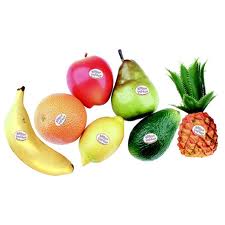
I especially like the fruit shakers. These great shakers are just a few examples.... maracas are great for any rhythm activity.

3. Triangle


These were always the favorites in my classroom - why not give your child free reign on one at home? Within reason, of course.... You may run from the house screaming if you don't keep it hidden sometimes.

4. Tambourine
Another favorite with most kiddos is this one.... I suggest one with a head (skin cover) on it because kids tend to gravitate to that kind more, but more importantly, it allows use as a drum and a shaker too. Please try and keep your child from hitting their sibling on the head with it, though.


5. Pots, Pans, Spoons, Bowls, etc...


Nothing beats what you can find around the house to make into a drum of some sort. Lots of excellent musicians began experimenting rhythmically with these humble beginnings. :-)


Combined Kits: 
Here are two combined kits I like as well where you get a bunch of instruments in one group:

B. Parum Pum Pum Drum:
Great for little ones - there are lots of sounds to explore with this set and they're designed so creatively. The container is a drum which even has a strap so your little darling can march around like the little drummer boy him(her)self!


Rhythm Band Rockin' Rhythm Bag:
This one is better for older kids.... beware of the rhythm sticks. I know what my boys would use those for right now and it would not be for music!


Reminder... As stated before, I vote for getting your child singing first and foremost. Rhythm instruments are also a natural outflow of your child's musical curiosity, so encourage them at age-appropriate levels and demonstrate well by using them correctly and keeping a beat. Don't just expect them to know what to do with these instruments, though - demonstrate for them with enthusiasm.

My suggestions for music to use these with? Any song you're singing with them... or turn on some salsa music and let 'em at it. :-)

Thursday, March 8, 2012

Rhythmic Reading


A simple and fun way to incorporate rhythm into your child's body is to read stories that rhyme to your kiddo... and since it's pretty hard to get away from books that rhyme, this should be easy!

Some stories work better than others. Today, we did this with an old favorite, "Brown Bear, Brown Bear, What Do You See?" by Bill Martin/Eric Carle.


Some great books for rhythmic reading that we've used:
"Jamberry" by Bruce Degen

"Circus Parade" by Harriet Ziefert


Also, any collection of Mother Goose Rhymes are great too. Scholastic has a series out of themed Mother Goose Rhymes. We have the colors-themed one below, which is great!


But, again, rhyming books are everywhere!

Some guidelines:
-Chant the lines as appropriate - incorporating strong and weak beats (i.e. LITTLE boy BLUE come BLOW your HORN...).
-Use different pitches in your voice - highs, lows and in betweens as fits your story or rhyme.
    For example.... in "Brown Bear..."  I usually alternate between high- and low-pitch voices for the    various animals as I think they would talk. :-)
-If child is on your lap, feel free to move your legs up and down to the beat, or tap your child's arm to the beat, or sway to the beat.... anything to communicate the rhythm of the text.
-Go ahead and sing it too! Your child is very forgiving, by the way.... :-)

So, simple and SO effective when done regularly. In my teaching, the NUMBER ONE problem I encounter in kids is a poor sense of rhythm and this is the HARDEST thing to instruct a student in if they don't naturally "get it."  So, I encourage you ALL to help the cause for rhythm!

Have fun!

Tuesday, March 6, 2012

Fast and Slow - The Tortoise and the Hare

The story of the Tortoise and the Hare... It's one of Aesop's most well-known fables teaching lessons of steady perseverance and the dangers of boasting.

So, this story provides great opportunities for learning many valuable things, and this post will focus on some things musical (surprised?).

First - Talk about and describe fast and slow. Have child act out each one by running, walking, or talking to each speed.

Second- Use a good book of this story to read to your kiddo/s. We're using one that I like (published by "The Child's World") because of its straightforwardness, meaning it doesn't have ridiculous modern additions that detract from the story. You can certainly find one at your library.... there are oodles to choose from.


Incorporate a song for the tortoise (slow speed) and another for the hare (fast speed) and insert them in to the story where appropriate. For example, every time the turtle is plugging away, sing the song for "slow and steady" These are ones we used:


Words: 

Hare Song:
I'm fast, so fast
Oh what a pace!
It's easy, I will win this race! 


Tortoise song
Slow and steady, 
Always ready 
I can get where 
I must go. 

Third - Act out this story with kiddos being a character or with you and your kiddo, if there are no others. Sing the songs as you act each part out.

                                    Tortoise and Hare ready to go....

                                          Slow and steady wins!

Do a search for other great activities to go along with this story. I like this simple turtle one we'll be doing from one of my favorite blogs: Go Here

Also, this book compares various animals who are fast and slow:
"Fast and Slow" An Animal Opposites Book (Lisa Bullard)

Have fun and be creative!

Friday, March 2, 2012

Chants for Baby

Babies love to know that you love them. One way to show this is to have fun playing with them. They enjoy laughing with you. It really does help build happy, delightful children with a joyful twinkle in their eye!

Another fun way to engage your baby (ages 0-1ish... or beyond!) is by chants where you incorporate their little bodies into the actions. We are all probably familiar with "Pat-a-cake, Pat-a-cake, Baker's Man" - which is a great one! - and how much the babies love it because of the rhyme and hand motions the parent does with baby's hands. These types of chants are great for several reasons:

1. They are rhyming and sing-songy, teaching rhythm, patterns and vocal creativity
2. They use baby's body, helping baby become aware of various body parts and the different feelings caused when mommy or daddy uses them for motions or tickling.
3. They bond parent and baby
4. They can get baby laughing and smiling when seemingly nothing else can.
etc, etc....

So, if you're getting tired of "Pat-a-cake" here are a few more to try:

Old Hawk
Old hawk goes
around, around
finds a little.... chickie!

Motion suggestions: 
Do this one with baby lying on back.
During first 2 lines, make your hands or just fingers into a flying motion and "fly" around baby's belly.
During third line, pause briefly after "little" and plunge fingers down (appropriately!) to baby's belly and tickle on the word "chickie!"

Around, Around the Garden
Around, around the garden
the little bunny goes.
Hippity-hop, Hippity-hop,
I'm gonna get your.... nose!

Motion suggestions: 
This one can be with baby sitting or laying on back.
"Hop" your two fingers around baby's body.... belly, arms, legs, etc. until you come to the "I'm gonna get your..." where you get closer and closer to baby's nose. Then, gently squeeze baby's nose on the last word.

Bore a Hole
I'm gonna bore a hole,
I don't know where,
I think I'll bore a hole right..... there!

Motion suggestions:
Baby can be laying down or sitting.
With your pointer finger, move in circular motion in the air around baby and then have a slight pause before picking a spot where your finger dives down to baby and tickles.

Pausing a second or two before the climax of the rhyme enhances baby's expectation and usually results in more giggles because of the extra anticipation. :-)

Don't forget the old standards like "Eeny-Meeny-Miney-Mo" too!

Which chants are your baby's favorites?